Free Calculators Hub
Shipping Cost and Cost-per-Unit Calculator
Sums user-entered freight, packaging, handling, insurance, and surcharges for one shipment and divides the total by units.
Limitation: This calculator does not connect to carriers, quote live rates, optimize routes, calculate dimensional weight, classify customs, or guarantee final charges.
How to Calculate Shipping Cost
Enter all components for one shipment in one currency.
Choose a display currency; the calculator does not convert currencies.
Use landed cost when needed
Duties, taxes, brokerage, storage, returns, and last-mile charges belong in surcharges only if they apply to the same shipment and are known.
What the Shipping Cost Result Means
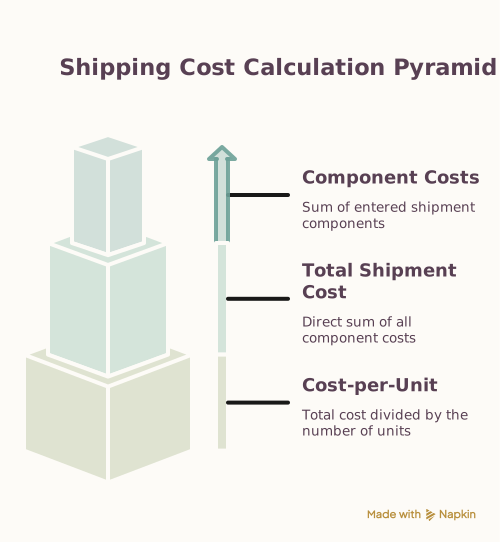
The shipment total is a direct sum of entered components. Cost per unit spreads that total evenly across units, regardless of differences in item weight, volume, value, or handling. It is a cost worksheet, not a rate engine or optimization recommendation.
Shipping Cost Examples
Twenty-five-unit shipment
Entered shipment components
Total and per-unit cost
The five entered costs sum to 75 and divide evenly across 25 units.
No-charge internal scenario
Entered shipment components
Total and per-unit cost
The model accepts a zero-cost scenario but does not imply real shipping is free.
Reconcile after invoicing
Compare the scenario with the final carrier invoice and update omitted surcharges before using cost per unit in pricing.
Frequently Asked Questions
Still have questions about this calculation?
Try the CalculatorShipping Cost Formulas
All values are supplied by the user; no carrier tariff, zone, package, or market data is inferred.
Formula
Total shipment cost
freight + packaging + handling + insurance + surcharges
Cost per unit
total shipment cost ÷ units in shipment
Scientific Background
Assumptions: one shipment, one currency, known components, and equal cost allocation per unit. Limitations: actual carrier charges may depend on origin, destination, service, dimensional weight, package count, timing, contracts, fuel indexes, duties, taxes, and adjustments not represented by these fields.
Sources & review
Shipping Cost Calculator documents the references behind its formulas and assumptions. Always treat results as educational estimates, not personalized professional advice.
Last reviewed
July 22, 2026
Free Calculator Hub methodology
Free Calculator Hub
/methodology
See our methodology and corrections policy.