Free Calculators Hub
Inventory Turnover and Days Calculator
Divides period cost of goods sold by average beginning and ending inventory, then converts turnover to approximate days inventory for the entered period.
Limitation: This accounting ratio uses only entered book values.
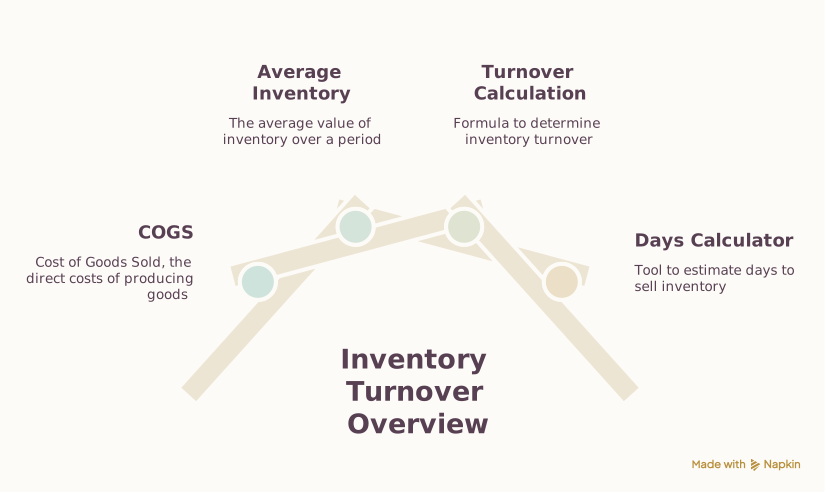
How to Calculate Inventory Turnover
Enter COGS and inventory values measured on the same accounting basis.
Choose a display currency; no conversion is performed.
Match periods and valuation methods
Do not mix annual COGS with monthly balances or inventory measured under different accounting policies.
What Inventory Turnover Means
Turnover compares period COGS with average inventory. A higher ratio means more COGS relative to the average balance, but whether that is desirable depends on availability, margins, lead times, seasonality, and industry. Days inventory is the reciprocal expressed over the entered period.
Inventory Turnover Examples
Four inventory turns
Period COGS and inventory
Turns and days
Average inventory is 125,000 and 500,000 divided by 125,000 is 4.
No COGS in the period
Period COGS and inventory
Turns and days
Days inventory cannot divide by zero turnover.
Compare like with like
Trend the same definition over time or compare with businesses using compatible accounting and product mixes.
Frequently Asked Questions
Still have questions about this calculation?
Try the CalculatorInventory Turnover Formula
The accounting definition uses COGS divided by average inventory; this tool approximates average inventory from two balances.
Formula
Average inventory
average inventory = (beginning inventory + ending inventory) ÷ 2
Inventory turnover
turnover = cost of goods sold ÷ average inventory
Days inventory
days inventory = days in period ÷ turnover
Scientific Background
Assumptions: book COGS and inventory share a period, currency, valuation basis, and business scope. Limitations: a beginning/end average can conceal intra-period volatility, and this descriptive ratio does not identify obsolete stock, stockouts, supplier lead time, or an optimal target.
Sources & review
Inventory Turnover Calculator documents the references behind its formulas and assumptions. Always treat results as educational estimates, not personalized professional advice.
Last reviewed
July 22, 2026
Reference
openstax.org
https://openstax.org/books/principles-financial-accounting/pages/10-5-examine-the-efficiency-of-inventory-management-using-financial-ratiosIRS digital assets / tax reference
Internal Revenue Service (IRS)
https://www.irs.gov/publications/p538Free Calculator Hub methodology
Free Calculator Hub
/methodology
See our methodology and corrections policy.