Free Calculators Hub
Dropshipping Profit, Fees, and Margin Calculator
Calculates revenue and subtracts per-unit product and shipping costs, platform and payment fees, advertising, refunds, and chargebacks.
Limitation: This is a deterministic unit-economics scenario, not an earnings forecast.
How to Calculate Dropshipping Profit
Keep sales, costs, fees, advertising, and refunds within the same scope.
Choose one display currency; no conversion is performed.
Do not net costs twice
If reported revenue is already net of refunds or a fee is included in another entered amount, exclude that item from the separate field.
What Dropshipping Profit Includes
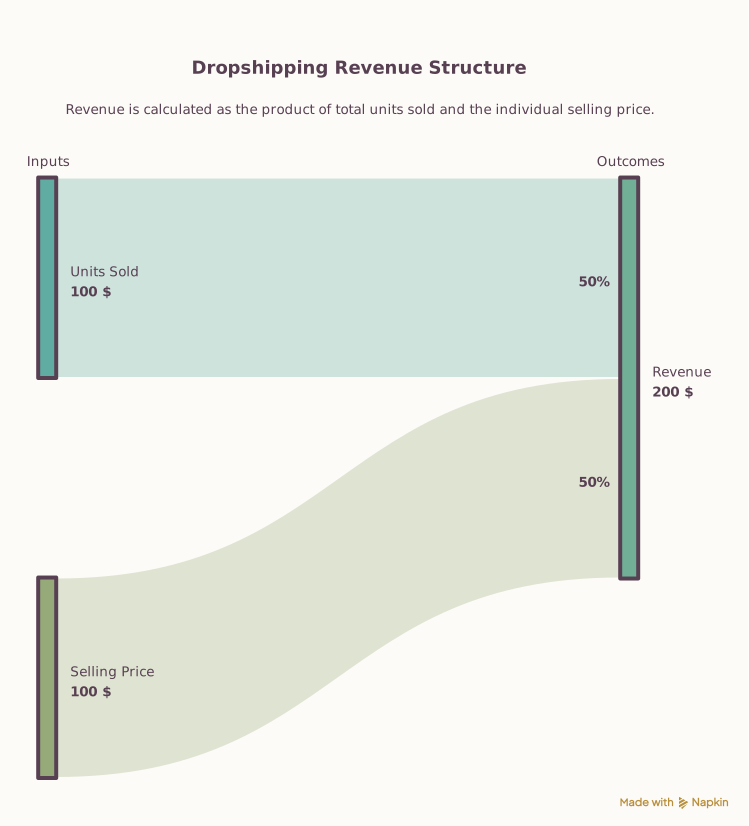
Revenue is units multiplied by selling price. Product and supplier shipping scale with units. Platform and percentage payment fees use gross modeled revenue; fixed payment fees use orders. Advertising and refund/chargeback losses are entered totals. The result can be negative.
Dropshipping Profit Examples
Positive campaign economics
Sales and cost assumptions
Profit and margin
Revenue is 3,000 and the disclosed cost stack totals 2,461.
Loss on one order
Sales and cost assumptions
Profit and margin
Product and shipping cost exceed gross revenue.
Reconcile fee bases
Platforms may apply fees to taxes, shipping charged to customers, discounts, or other bases this simplified model does not infer.
Frequently Asked Questions
Still have questions about this calculation?
Try the CalculatorDropshipping Profit Formulas
The model exposes each cost rather than applying a generic margin assumption.
Formula
Revenue
revenue = units sold × selling price per unit
Payment fees
revenue × payment fee % + orders × fixed payment fee
Total costs
product + shipping + platform + payment + ads + refunds/chargebacks
Profit margin
profit ÷ revenue × 100
Scientific Background
Assumptions: constant unit prices and costs, fee percentages applied to gross revenue, one currency, and orders no greater than units. Limitations: the model excludes taxes, currency conversion, apps, subscriptions, labor, samples, returns processing, reserves, supplier failures, discounts, and fee-tier rules unless included in an entered field.
Sources & review
Dropshipping Profit Calculator documents the references behind its formulas and assumptions. Always treat results as educational estimates, not personalized professional advice.
Last reviewed
July 22, 2026
Reference
sba.gov
https://www.sba.gov/business-guide/manage-your-business/marketing-salesFree Calculator Hub methodology
Free Calculator Hub
/methodology
See our methodology and corrections policy.