Free Calculators Hub
Refinance Comparison and Break-Even Calculator
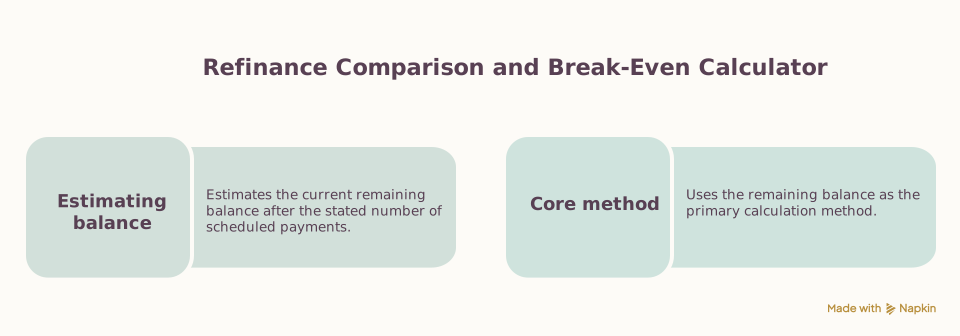
Estimates the current remaining balance, compares scheduled payments and total remaining costs, and divides upfront closing costs by a positive monthly payment reduction for simple break-even.
Limitation: Scenario comparison only.
How to Compare a Refinance Scenario
Reconstruct the current loan from its original terms, then enter one proposed fixed-rate refinance and upfront closing costs.
Enter the original principal, fixed rate and term.
A lower payment can come from a longer term
Extending repayment may reduce the monthly amount while increasing the time in debt or total cost. Review all comparison fields.
Comparison Intent—not Another Mortgage Calculator
This tool first estimates the current remaining balance after the stated number of scheduled payments. It then amortizes that balance under the proposed rate and term. Simple break-even exists only when the proposed scheduled payment is lower; it divides upfront closing costs by that monthly difference and rounds up to a whole month. Total scheduled-cost comparison includes current remaining payments versus proposed payments plus upfront costs, but excludes discounting and transaction-specific tax effects.
Refinance Comparison Examples
Lower-rate, same remaining term
Current and proposed terms
Estimated comparison
The estimated balance is 280,832.93. Closing costs are treated as upfront and are not financed.
No payment break-even
Current and proposed terms
Estimated comparison
The proposed scheduled payment is higher, so closing costs cannot be recovered through a monthly payment reduction.
Verify the actual payoff
A current servicer payoff quote may differ from an amortization estimate because of daily interest and account-specific charges.
Frequently Asked Questions
Still have questions about this calculation?
Try the CalculatorRefinance Balance and Break-Even Formulas
The comparison combines an amortized remaining-balance equation with a deliberately simple cash break-even measure.
Formula
Remaining balance
Bₖ = P(1 + r)^k − M((1 + r)^k − 1) / r
Proposed payment
Mnew = Bₖ × rnew / (1 − (1 + rnew)^−nnew), or Bₖ / nnew at 0%
Simple break-even
months = ceiling(upfront closing costs / (current payment − proposed payment))
Scheduled-cost difference
current remaining scheduled payments − (proposed scheduled payments + upfront closing costs)
Scientific Background
Simple break-even does not discount future cash flows and cannot capture opportunity cost, taxes or uncertain holding periods. Use it as one comparison metric.
Sources & review
Refinancing Calculator documents the references behind its formulas and assumptions. Always treat results as educational estimates, not personalized professional advice.
Last reviewed
July 21, 2026
Consumer financial tools
Consumer Financial Protection Bureau (CFPB)
https://www.consumerfinance.gov/ask-cfpb/is-there-such-a-thing-as-a-no-cost-or-no-closing-loan-or-refinancing-en-141/Consumer financial tools
Consumer Financial Protection Bureau (CFPB)
https://www.consumerfinance.gov/owning-a-home/loan-estimate/Free Calculator Hub methodology
Free Calculator Hub
/methodology
See our methodology and corrections policy.