Free Calculators Hub
Debt Snowball Month-by-Month Calculator
Sorts up to 12 fixed-rate debts by starting balance, keeps total minimums plus extra as a fixed monthly budget, and simulates cents-rounded payoff month by month.
Limitation: Educational deterministic estimate only.
The model keeps the sum of entered minimums plus the extra amount as a fixed monthly budget. Each minimum must exceed that debt's first-month interest.
How to Build a Debt Snowball Estimate
Enter each debt separately so the ordering and payment-coverage checks are visible.
Select a display currency and enter the extra amount available every month.
The budget stays fixed
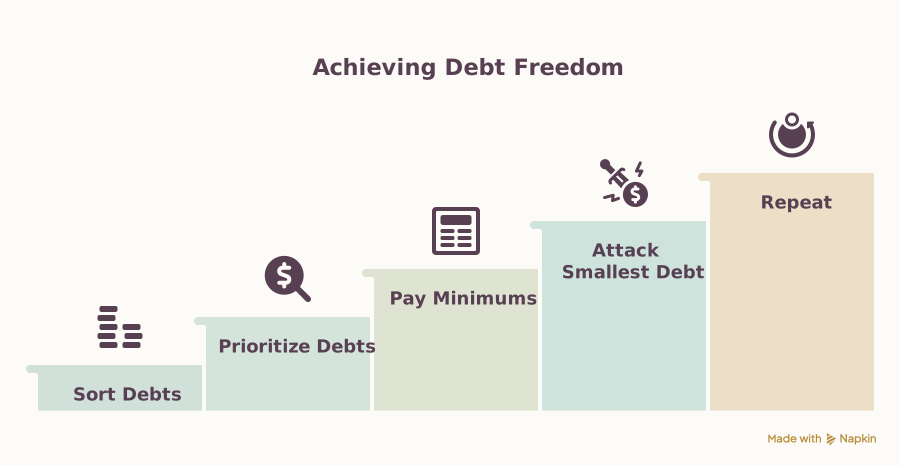
The model keeps the sum of starting minimums plus your extra amount available each month. When one debt is paid, its former minimum becomes part of the amount directed to the next debt.
A Balance-Ordered Simulation, Not an Optimization Claim
The engine sorts debts by starting balance, with entry order breaking equal-balance ties. Each month it adds cents-rounded interest, pays every active debt's minimum, then directs the remaining fixed budget to the first unpaid debt in that order. Amounts left after a payoff roll to the next target in the same month. A debt is rejected when its entered minimum does not exceed first-month interest, preventing a hidden negative-amortization assumption. The simulation does not compare avalanche or other strategies and does not claim to minimize interest.
Debt Snowball Examples
Two-debt snowball
Debt collection and fixed budget
Payoff simulation
The fixed monthly budget is $175. The smaller starting balance receives the extra amount.
Zero-rate boundary
Debt collection and fixed budget
Payoff simulation
The $50 fixed budget repays exactly $300 of principal.
Compare strategy and feasibility separately
A balance-first sequence may support motivation, but a different order can produce different interest. This version does not optimize or recommend an order.
Frequently Asked Questions
Still have questions about this calculation?
Try the CalculatorDebt Snowball Simulation Rules
The result comes from explicit monthly cash-flow rules rather than a closed-form payoff promise.
Formula
Priority
ascending starting balance; entry order breaks ties
Monthly interest
rounded opening balance × annual rate / 12
Fixed budget
sum of entered starting minimums + entered extra amount
Monthly allocation
active minimums first, then remaining budget to first unpaid priority debt
Scientific Background
CFPB budgeting and debt resources emphasize understanding balances, rates, payments and creditor information. The Federal Reserve's consumer-credit materials distinguish revolving and installment debt. The snowball ordering is a user-selected behavioral strategy, not a mathematical guarantee of lowest interest.
Sources & review
Debt Snowball Calculator documents the references behind its formulas and assumptions. Always treat results as educational estimates, not personalized professional advice.
Last reviewed
July 21, 2026
Consumer financial tools
Consumer Financial Protection Bureau (CFPB)
https://www.consumerfinance.gov/about-us/blog/how-reduce-your-debt/Consumer financial tools
Consumer Financial Protection Bureau (CFPB)
https://files.consumerfinance.gov/f/documents/cfpb_ymyg-toolkit_reducing-debt-worksheet.pdfFree Calculator Hub methodology
Free Calculator Hub
/methodology
See our methodology and corrections policy.