Free Calculators Hub
Breaker Size Calculator
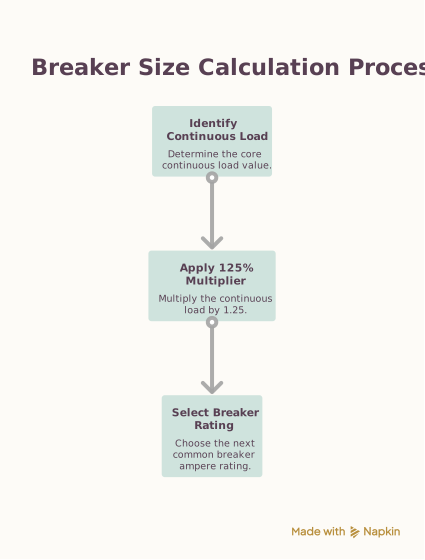
Applies an optional 125% continuous factor, then rounds up to a common breaker amp rating.
Limitation: Educational estimate only.
How to Use the Breaker Size Calculator
Enter the fields below, then review the educational estimate.
Enter the steady load in amps.
Wire must match
A larger breaker never “fixes” undersized wire. Coordinate breaker, conductor, and device ratings.
What This Calculator Estimates
Educational overcurrent sizing: optional 125% continuous multiplier, then the next common breaker ampere rating.
Worked Examples
16 A continuous
Inputs
Result
16 × 1.25 = 20 → 20 A standard size.
18 A non-continuous
Inputs
Result
18 A rounds up to 20 A.
Safety first
De-energize circuits before measuring. When in doubt, stop and consult a licensed electrician.
Frequently Asked Questions
Still have questions about this calculation?
Try the CalculatorFormulas & Assumptions
Transparent educational arithmetic. Not NEC design software or a wiring permit.
Formula
Continuous
design = load × 1.25
Standardize
breaker = next standard ≥ design
Scientific Background
Real installations must follow the adopted electrical code, listing/labeling, ambient conditions, and manufacturer instructions. This page intentionally stays a rule-of-thumb worksheet.
Sources & review
Breaker Size Calculator documents the references behind its formulas and assumptions. Always treat results as educational estimates, not personalized professional advice.
Last reviewed
July 22, 2026
Reference
physics.nist.gov
https://physics.nist.gov/cuu/Constants/index.htmlReference
nist.gov
https://www.nist.gov/pml/owm/wire-gauge-and-current-carrying-capacityFree Calculator Hub methodology
Free Calculator Hub
/methodology
See our methodology and corrections policy.